The folks at CapX asked me to put together something on the Canadian perspective on the trade war. I hope to emphasize that we're not in an old-school trade war aimed at improving economic outcomes. Actually, it might be an older-school trade war: It's about power and dominance. That changes things, and not in a good way.
Canada is fighting back against US tariffs
They are willing to pay some price simply as an act of defiance
capx.co
Political coalitions emerge when the benefits of more tightly organized political action outweigh the foregone benefits of uncompromising, dispersed, and purely principles-based action.
Liberals should tenaciously keep the disagreements with our coalition partners as live disagreements rather than suppressing them.
Because liberalism needs to be defended not only *by* coalitions, but also *within* them while they exist and *without* them after they end.
Tribes, Coalitions, Parties
A theory of how political organizations form, cooperate, rise, and decline.
liberalism.org
Today at Liberalism.org, I propose a model of thinking about our politics in terms of clear principles that can act as coordination points for people with many different motivations, beliefs, resources, and plans of their own.
My hope is that it helps liberals better navigate the political world we're in today and shows them that today's politics are politics that principled liberals can and should join.
A Liberalism of Principle, Not Program
Slavery’s opponents knew how to keep things simple. Today’s liberals should do likewise.
liberalism.org
My piece this week at Liberal Currents: on the long push (including in this piece) to convince classical liberals they can rejoin the left to work against authoritarianism and why it's taking so long.
It is based on having worked through what happened politically around me as the postliberal moment emerged from the apparently libertarian one. It holds out a hand to those still where I was and tries to show a way forward.
Liberalism Reunited
Classical liberals must rejoin left liberals in fighting for emancipatory politics and against the illiberal right.
liberalcurrents.com
I make my debut at Liberalism.org, arguing that liberal principles don't to have to be separated from politics for liberalism to defend itself and thrive. In fact, they shouldn't be.
Principled liberal commitments have to be paired with commitment to liberal—persuasive, democratic—politics.
The Liberal Spirit of System
The “man of system” is a famous figure in the work of Adam Smith, and not in a good way. And yet we all think in systems. They can be both beautiful and helpful. What gives?
liberalism.org
Apparently I did not share my condemnation of libertarian utopianism in practice. At The Reading Room, I use Isabel Paterson to show why failing to update abstract libertarian arguments for reality, or even failure to just apply libertarian standards to libertarian arguments, can lead libertarians to exactly the spot Paterson sees her opponents heading.
The Libertarian With the Guillotine | Online Library of Liberty
Isabel Paterson's argument against government charity hasn't held up, but it still offers important lessons about liberal, and libertarian, politics.
oll.libertyfund.org
At liberal currents, I reject the idea that the government can be in charge of creating a certain sort of people. That means that liberals have to take charge of being, and teaching and persuading into existence, the *liberal* values, morality, and ideas that can support liberalism.
And fusionism is a trap: liberals are not simply living or defending conservative, socialist, or any other values and virtues under a liberal institutions.
Liberalism Needs Liberals
It is precisely because liberalism cannot take sides that liberals must.
liberalcurrents.com
And here's me! Just a short piece, but on something that keeps eating at me. Free trade has new friends. It can feel like prices have none left.
(Exception: Congestion pricing. I should write that up.)
More Fronts in the War on Prices - Econlib
When we talk about opposition to prices, we’re usually talking about price controls. This isn’t unreasonable. There are still calls for them in response to short-term higher prices after a disaster, or longer-term cost-of-living increases, as for rent or food. It’s important to explain the negative unintended consequences of such interventions. But sometimes, people who […]
econlib.org
My read on the results of this week's election in Canada. Liberals are celebrating, and fair enough. But the main thing I think we bought is time to start getting results. Poilievre's Conservatives showed that a populist right that mostly drops its free market and liberal commitments has the potential to win big. Liberals of all party stripes should notice that and respond.
A Liberal Victory Does Not Mean Populist Furies Are Dead in Canada
For that, the party will have to correct its abysmal governing failure and deliver economic results
theunpopulist.net
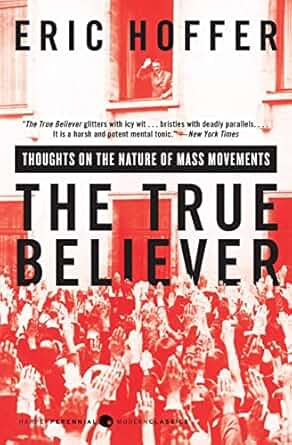
I explore Eric Hoffer's mistaken conception of liberalism in his short, influential book, The True Believer.
Liberalism in The True Believer | Online Library of Liberty
In November, Liberty Fund hosted a virtual reading group on Eric Hoffer's short book, The True Believer. One topic of discussion was Hoffer's conservatism, which is implicit to his theories of mass movements. One place it’s implied is in his mistreatment of liberalism. In section 52, under “Deprecation of the Present”, Hoffer sums up his views of conservatives, skeptics, liberals, radicals, and reactionaries.
oll.libertyfund.org
Belatedly sharing my suggested mindset for liberals today.
The Plucky Remnant
A new home and a new mindset
janetbufton.ca
I have done my best at the beginnings of an argument for a market liberal case for liberal democratic politics and government over the course of four essays, collected and summarized here.
Democracy for liberal people
Market liberals need liberal democracy
janetbufton.ca