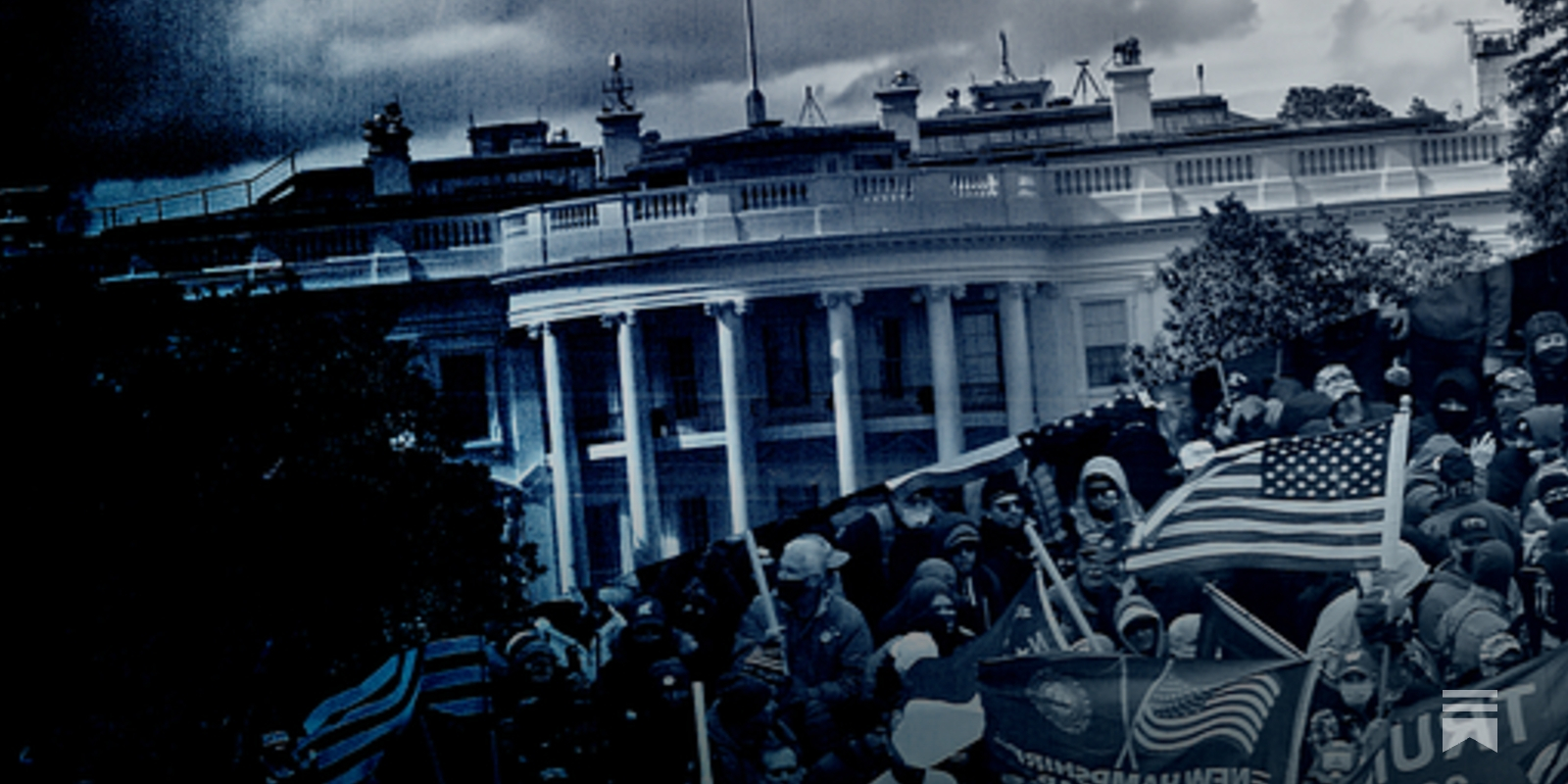
In the 1990’s Czech Republic, Wendy Riker Purnell was teaching media literacy and writing about the reemergence of civil society in a nation recovering from decades of authoritarianism. Little did she know that 30 years later, Americans would *desperately* need info literacy to stave off something that is difficult to distinguish from fascism.
She has published on the topics of rights-based environmental conservation and renewing indigenous economies. Currently, she writes grants and supports a wide range of programs for an academic library.
Wendy believes the secrets to the universe are woven into Paul’s Boutique, but she reads across an array of disciplines and will share random bits of nerdiness accordingly.
If the members of our congressional delegation can't do their part to restore the rule of law, I hope they respect their office (and us) enough to resign and make room for people who do take the oath, our founding ideals, and our charter documents seriously.
“There is no reality in which these strikes are legal, moral, or remotely consistent with a nation that claims to adhere to democratic principles. The strikes are lawless, reckless, and barbaric, and the administration’s shifting justifications are a morass of misdirection and legal shell games.”
A conservative perspective includes the traditional values of a community. In the Rocky Mountain West, that means the “live and let live” and “love thy neighbor” principles the rainbow flag represents.
I missed this Esquire piece last year.
This movie is not for everyone, but it is the best love story on celluloid and an absolutely prescient take on the social distortions of the 24 hour “news” cycle.
“Defining oneself by one's adversaries rather than by one's principles is a recipe for intellectual decay and political aimlessness. Such a mindset breeds short-term thinking and risks engendering a culture of resentment rather than one of renewal.”
Mike Pence & Ed Feulner (founder of the Heritage Foundation) offer a reminder of what a respectable and respectful conservatism looks like.
Even — perhaps especially — in the year of our decline 2025, Chloe Valdary wants you to love your life.
“If you do this, you will discover a gift: The ability to give thanks in turbulent times. Those who know how to give thanks in moments of terror and chaos are the owners of a peace of mind that money cannot buy.”
“An elegant trickster, he bent journalism toward the rhythms of literature.”
Love this piece on wishing we had a (or the!) Tom Wolfe for this moment and also reflecting on how he probably helped get us here.
“Those who are actually liberal, in the broadest sense of the word, whether left liberal, right liberal, classical liberal, conservative democratic or uncategorizable, are committed to a shared set of minimal basic norms: pluralism, democracy, and an effective state that doesn’t exceed its bounds…
“Professional friendships, funding relationships etc are fungible. Basic philosophical commitments are not.”
Every. Single. Word. of Jonathan Blanks’ advice on responsible media consumption (and more):
“If you are strapped for cash and can’t afford to pay for news, check your local library… free reliable information is an undervalued and underused resource available in this country.”
And “if you’re doom-scrolling social media, having the time isn’t really the issue; it’s how you use it.”
Trumpette Noem's ignorance of Indian Law and U.S. treaties with sovereign Nation nations, not to mention her "antagonistic relationship with tribal nations could be a harbinger of what’s to come with her oversight of Homeland Security, where she will have broad authority to waive federal laws meant to protect tribal sites, and where a lack of adequate policies, interpretation and understanding of international Indigenous rights has already brought harm and even death to Indigenous immigrants and families.”
Linguistic dereliction? Like pretending adjectives = nouns?
I’m as pedantic as they come, but we pedants lose the moral high ground when we make ill-informed arguments.
PBS Newshour's Judy Woodruff says "it’s actively harmful for our fiber, our strength as a country when we don’t have local journalism."
In the Texas panhandle, Woodruff talked to a rancher about their local paper going under:
“I didn’t always agree with Laurie Brown” — she’s the editor — “with her editorials. She leans a little bit more to the left than we do, than I do.” But, he said, “This newspaper has been the glue that has helped hold our community together.”
Reflecting on the Hungarian experience and Viktor Orbán’s devolution, Kati Marton recalls Voltaire’s warning, “He who can persuade you to believe absurdities can persuade you to commit atrocities.”
“Neither individuals nor nations escape history for long,” Marton continues, “and with Mr. Trump’s election, history threatens to barge into our American democratic sanctuary with a vengeance.”
Our ideas — private property, skepticism of authority, free markets, individualism, spontaneous order, and individual liberty — “are worth preserving and fighting for, but I’m not sure that those of us who advocate them should short-hand to the term ‘libertarian’ outside of an academic or specialized context for a while if we want to be accurately understood. For practical purposes we’re just liberals now.”
“Humility is the best filter,” I often say.
Philosopher Rachel Fraser challenges intellectual humility as a virtue. “There are traits that are sometimes conducive to knowledge, and traits that are sometimes not.”
Folks who aren’t collegial in workshops may contribute a great deal to the literature, so I cede the point about traits. I also cling to the idea that intellectual curiosity, courage, honesty & humility are virtues becaue they advance knowledge & help us respect & understand others.
At first glance, one might write this off as a privileged person (Harvard prof & president emerita) waxing nostalgic for a more charming, less digital time.
Consider reading it for the anecdote that yells — from what is likely an unmarked grave — I will not be erased from history!
“We’ve shifted focus from the politics of redistribution to the politics of recognition… The person practicing the politics of recognition is not trying to get resources for himself or his constituency; he is trying to admire himself. He’s trying to use politics to fill the hole in his soul. It doesn’t work."
“Although Nazis were more famous for burning books, they also sold them. Destroying books and establishing bookstores were both a tacit acknowledgment of the same truth: books have power.”
A brief history of the early 20th-century’s radical bookstores that provided refuge to America’s communists, fascists, and socialists.
While I drink the cans at home, I haven’t deigned to request Athletic’s NA beer on tap.
My conscious motivators were my appreciation for an excuse in to drink real beer & my adopted reverence for beer after time spent in the CZR.
Maybe it was just straight up self preservation, influenced by my positiveexperience consuming whatever lukewarm food and bev I was generously offered from outdoor kitchens and wells next to pigsties because I knew they’d be followed by an offering of homemade rum.
There are three principles: The first is that we should have everything that Congress needs to do its work. The second is that we should possess the materials that cover the life and achievement of the United States. And the third is that we’re not in a vacuum, and we need stuff from the rest of the world.
“Far too complex to capture & far too dynamic to die.”
When people talk about perceived differences between Native America & “the rest of America,” I often say “maybe mainstream America but you could be describing Appalachia.”
I only lived there for 3 years but growing up, I spent summers & holidays there. When I did my time on the Hill, I was there nearly every weekend to see my grandmothers. My Appalachian roots run DEEP. My folk may be clannish but we’re duty driven, diverse & resilient AF.
“Like vengeance, blame is a natural response to traumatic violence, but time and information can provide a different perspective. “
As always, Jonathan Blanks provides a thoughtful exploration of the legality and morality of a police encounter gone wrong.
I'm in love with this project, a fabulous way to help restore meaningful sovereignty for the Saginaw Chippewa!
The Saginaw Chippewa Tribal Libraries are indigenizing library science with a new clan-based cataloging system called Maawn Doobiigeng (Gather Together). The new classification system also doubles as a teaching tool, helping library users gain more knowledge of the clans and Anishinaabemowin – the Anishinaabe language.
Kudos Anne Heidemann and colleagues!
“After I decided to be an artist, the first thing that I had to believe was that I, a black woman, could penetrate the art scene, and that, further, I could do so without sacrificing one iota of my blackness or my femaleness or my humanity.”
Faith Ringgold
Tar Beach, the one that hangs in the Guggenheim and the children's book version, is stunning. And eight-year-old Cassie Louise Lightfoot has some powerful things to say about freedom and confidence. Go read it.
Rest in Power
#AnyoneCanFly
“As stewards of information literacy and democratic institutions, librarians are right to be concerned with misinformation and its effects on public trust… Rather than incubate an atmosphere of paranoia in our information environment, we also need to become comfortable saying which guardrails are insufficient and which are still necessary to install. Public trust is easy to break and hard to rebuild.”
I needed this reminder that there is hope for “us” as in we and our fellow “democrats (with a little “d”), liberals (with a little “l”), and conservatives (with a little “c’)… who believe in freedom and democracy and the American experiment.”
What Happens *as* it Happens Here?
“The civic space – the space in which we air differences of opinion, voice our dissent, and in which we negotiate the compromises that define self-government – is closing… Fortunately, America has a uniquely robust civil society and philanthropic sector that can do what no other sector does to protect democracy.”
“The Creator of all things has given us a mind. We are told to utilize it to the fullest, as far as we can, using all of our senses… The mind has capabilities beyond anyone’s imagination of what it could and can do.”
14 months ago, sick in bed with COVID, I checked my home institution’s Twitter account to find 3 photos of Secretary Rice normalizing a Trumpette (governor of SD) by taking her seriously as someone who belonged on stage at Hoover. In that moment, I basically lost my faith in the future of our democracy. If a century-old institution that exists to oppose threats to liberalism is caving to the demands of an authoritarian cult, we could be doomed. I choose to believe we are not.
“Music is a core part of human experience… Understanding how the brain processes music can really tell us about human nature. You can go to a country and not understand the language, but be able to enjoy the music.”
As Jonathan says, “unless and until libertarians—as individuals and as institutions—prioritize separating
themselves from racists, they will continue to find themselves in bed with and greatly diminished by them.”
"Republicans now, more than ever, face a moment of truth. They must decide if they are partisans or patriots. They can no longer claim to be both."
This piece tells me I can finally start transitioning from “I’m deeply concerned about the ascendancy of something that is difficult to distinguish from fascism,” to terms that are more sincere and unfiltered without worrying so much about being deemed “alarmist.”
Literary editor Will Blythe ponders the digital universe, “a black hole, swallowing everything around it,” and the evolution of writing and reading in recent decades.
"While the popular history of the internet valorises Silicon Valley coders – or, sometimes, the former US vice president Al Gore – many of the original concepts for search emerged from library scientists focused on the accessibility of documents in time and space."
Known in "Persia as qanat, among the Uyghurs as karez, in Bali as subak, or aflaj in the Arab world," systems of "self-organizing, local water governance, where no one person is in charge," have endured for centuries, through political turmoil and extreme weather.
New England maple syrup may be the gold standard for waffles and sundaes, but the Pacific Northwest's native Bigleaf Maple may emerge as the favorite syrup source for cooking and cocktails.
So on brand for a PNW native.
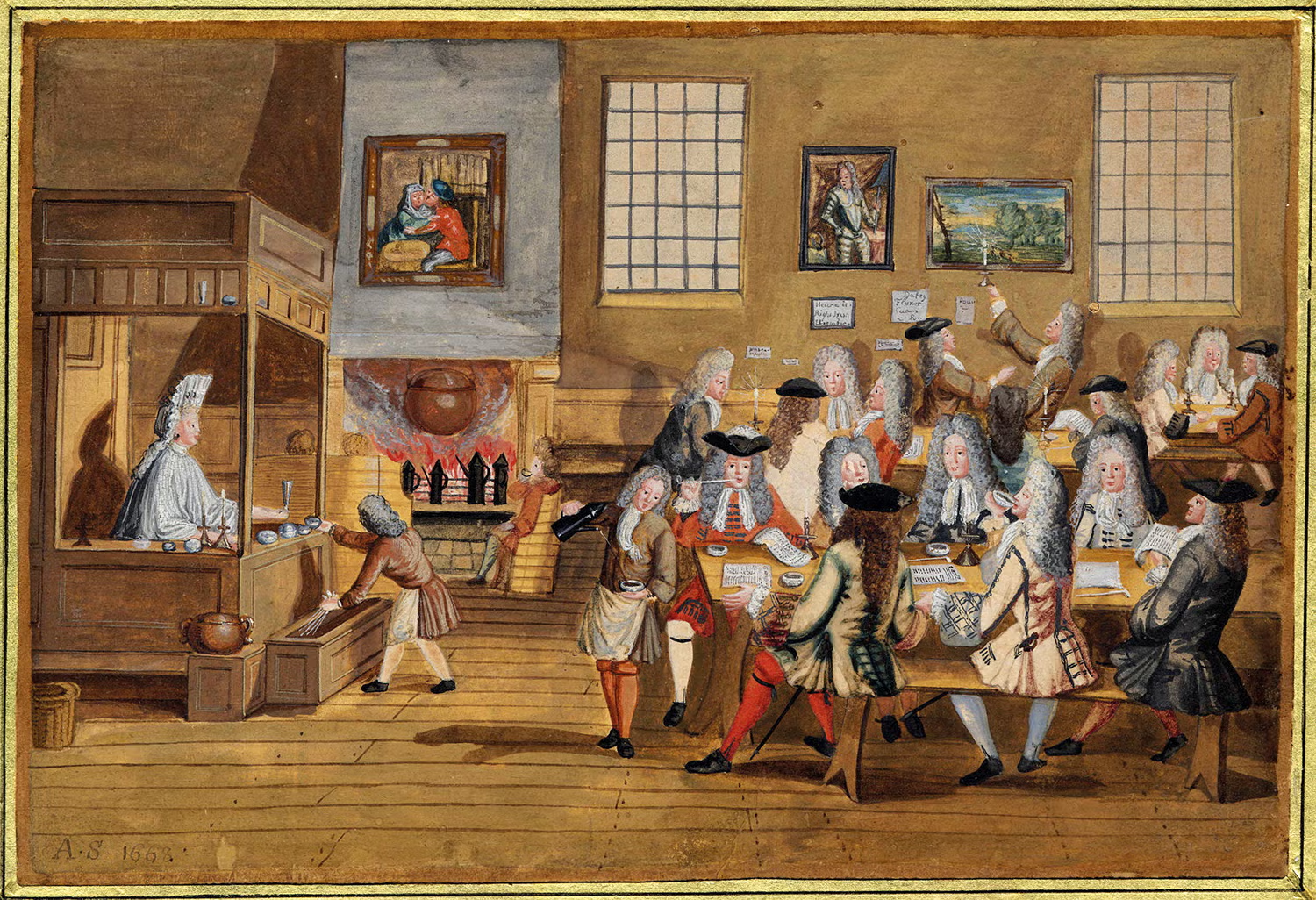
"To compare the coffeehouse tradition to the social media networks of today may seem far-fetched. But consider the parallels. Across its various manifestations, the coffeehouse typically fused news and debate in one space. People would go there to find out what was going on, discuss and take a view on it."
The Catawba Indian Nation has just set up "a special economic zone with regulatory certainty for web3, crypto, blockchain, and fintech companies that they might not find anywhere else in the U.S."
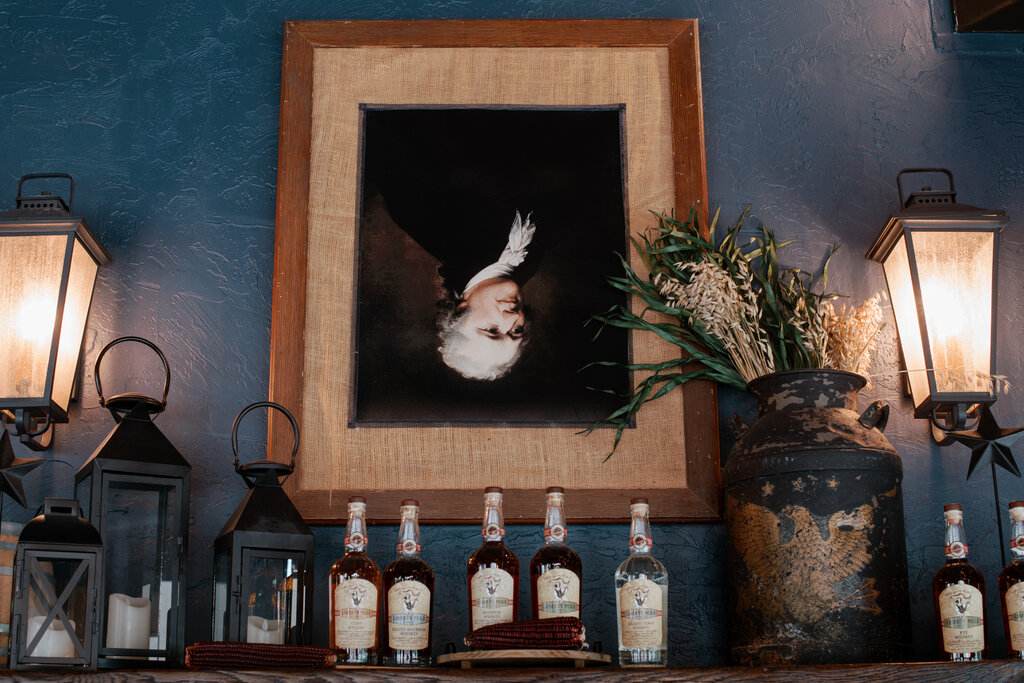
"Washington may have demonstrated the power of the federal government over the hinterlands, but in doing so he helped forge a regional identity, with whiskey at its core. By the early 19th century, hundreds of commercial distilleries operated in Western Pennsylvania, almost all of them making Old Monongahela."
I have yet to source a PDF of his paper "Tippling Toward Freedom: Alcohol and Emancipation," but I did find this recording of Luther Adams - Free Man of Color discussing the research on how tippling laws were used to incarcerate and disenfranchise free black people in the waning days of slavery.
Jacob probably already knew this, but I did not.
"Tippling laws were a common feature of slave societies in the U.S. According to the legal historian Judge Leon Higginbotham, at least since 1698 blacks, enslaved and free, were prohibited from buying and selling liquor."