
Well timed.

It’s Called America’s “Weirdest” City. But Just Wait Until You Hear What’s Going On in Its Coffee Shops.
Biking is just better with a caffeine buzz.
slate.com

@Benjamin
Writer, teacher.
Well timed.
It’s Called America’s “Weirdest” City. But Just Wait Until You Hear What’s Going On in Its Coffee Shops.
Biking is just better with a caffeine buzz.
slate.com
“In “House Exterior,” from The Guitar Man, she depicts a dilapidated, three-story house that’s instantly recognizable from the beloved Hitchcock film Psycho.”

Scratching the Surface: The Cinematic Paintings of Anna Weyant - Hi-Fructose Magazine
Anna Weyant’s work appears to have more in common with film than painting. Liz Ohanesian delves into the rising art star's latest work. Click above to read it, k?
hifructose.com
“The research reveals that there have always been people who perceived a talking machine as a step toward the automation –or even the substitution– of human beings. An article in Redbook magazine in 1955, for example, cited experts who worried that marriage rates might decline if “many functions of the wife are being usurped by machines.””

Vox ex Machina. A Cultural History of Talking Machines
From early robots to toys like the iconic Speak & Spell to Apple’s Siri, Vox ex Machina tells the fascinating story of how scientists and engineers developed voices for machines during t…
we-make-money-not-art.com
“One page of the presentation, describing the wishlist of Border Patrol’s Law Enforcement Operations Division, says the agency needs “Advanced AI to identify and track suspicious activity in urban environment [sic],” citing the “challenges” posed by “Dense residential areas.” What’s considered “suspicious activity” is left unmentioned.”

Border Patrol Wants Advanced AI to Spy on American Cities
A Customs and Border Protection “Industry Day” deck also asks for drones, seismic sensors, and tech that can see through walls.
theintercept.com

America is Not Where Marxism Goes to Die
A new history dismantles the conventional wisdom—and implicit premise of much pessimistic critical theory—that Marx’s ideas never gained ground in America.
damagemag.com

Self-Tracking: Why We Love Seeing Ourselves in Data
‘Listen to your body: all you have to do is wear it’This is the promise of the FitBit Inspire 3, launched in 2022. This is a product, the ad tells us, that ‘makes fitness so fun, you'll move more, love it and see how it all adds up’. Oh, and don’t forget: ‘track it or…
bluelabyrinths.com

MAGA Pundits Are Triggered That Superman Is an Immigrant
But he is an embodiment of America’s essential goodness and promise
theunpopulist.net
Mars needs insects. 🙂
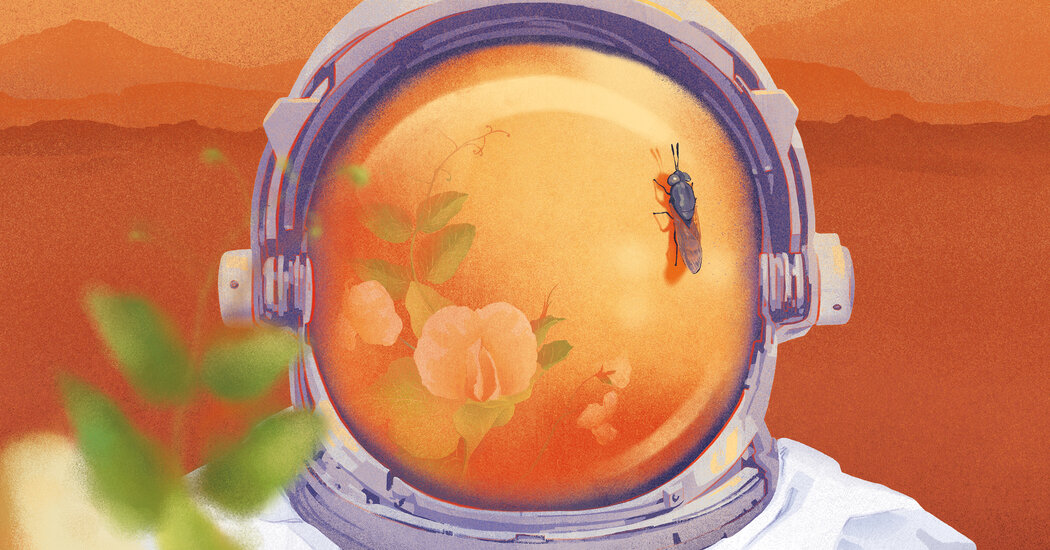
Mars Needs Insects
If humans are ever going to live on the red planet, they’re going to have to bring bugs with them.
nytimes.com
Fingers crossed. Long overdue.
White House plan would bolster mental health coverage
New rules aim to close loopholes that insurers have used to avoid covering mental health and addiction in parity with physical health.
statnews.com
Second post down at the link: The Power of Being a Heretic. “All traditional views are held with such tenacity, such almost ferocity, because they belong to the class of views induced, not by individual experience, still less by reason, but by collective, or, as it is sometimes called “herd,” suggestion.”
Marginalia on our search for meaning.
Marginalia on our search for meaning.
themarginalian.org
An idea more than a decade old. With social media possibly in a kind of transition, Pariser’s book is looking more urgent and prescient than ever.
The Filter Bubble: What the Internet is Hiding from You
In December 2009, Google began customizing its search results for all users, and we entered a new era of personalization. With little notice or fanfare, our online experience is changing as the web sites we visit are increasingly tailoring themselves to us. In this engaging and visionary book, MoveOn.org board president Eli Pariser lays bare the personalization that is already taking place on every major web site, from Facebook to AOL to ABC News. As Pariser reveals, this new trend is nothing short of an invisible revolution in how we consume information, one that will shape how we learn, what we know, and even how our democracy works. The race to collect as much personal data about us as possible, and to tailor our online experience accordingly, is now the defining battle for today's internet giants like Google, Facebook, Apple, and Microsoft. Behind the scenes, a burgeoning industry of data companies is tracking our personal information--from our political leanings to the hiking boots we just browsed on Zappos--to sell to advertisers. As a result, we will increasingly each live in our own unique information universe--what Pariser calls "the filter bubble." We will receive mainly news that is pleasant and familiar and confirms our beliefs--and since these filters are invisible, we won't know what is being hidden from us. Out past interests will determine what we are exposed to in the future, leaving less room for the unexpected encounters that spark creativity, innovation, and the democratic exchange of ideas. Drawing on interviews with both cyberskeptics and cyberoptimists, from the cofounder of OkCupid, an algorithmically driven dating web site, to one of the chief visionaries of the U.S. information warfare, The Filter Bubble tells the story of how the internet, a medium built around the open flow of ideas, is closing in on itself under the pressure of commerce and "monetization." It peeks behind the curtain at the server farms, algorithms, and geeky entrepreneurs that have given us this new reality and investigates the consequences of corporate power in the digital age. The Filter Bubble reveals how personalization could undermine the internet's original purpose as an open platform for the spread of ideas and leave us all in an isolated, echoing world. But it is not too late to change course. Pariser lays out a new vision for the web, one that embraces the benefits of technology without turning a blind eye to its negative consequences and will ensure that the internet lives up to its transformative promise.
books.google.com
A really accessible look at literary language translation, which is incredibly complex. The best bit is the presentation of process that unfolds as you scroll. Really clever.
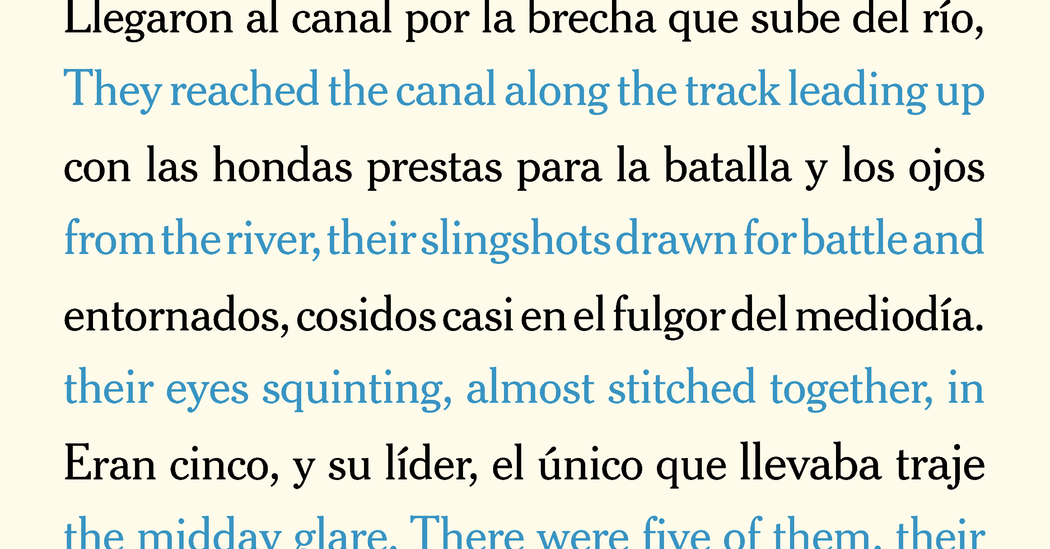
The Art of Translation
See how a translator carries a book from one language to another, line by line.
nytimes.com
Solutions to housing crises are pretty much always in the same vein - more units, more density. This seems like a pretty modest version of both, to be honest.

An Entirely Sensible Housing Plan in New York (That Is Nevertheless Going to Make Suburbanites Go Nuclear)
For America's most exclusionary towns, Kathy Hochul's new proposal nearly counts as radical.
slate.com
I’m not all-in on the argument here, but it is premised on this, and it rings true: “Thus anti-tax rhetoric is intended both to shield the rich from taxation and to starve government services that increase the autonomy of poor and working people.“

Radical Taxation - Dissent Magazine
Taxes demonstrate the legitimacy of democratic control of the economy. This is what conservatives cannot accept—and what surviving climate change will require.
dissentmagazine.org
Another one from the archives. My “review” of “the most dangerous movie ever made.” Roar, 1981, dir. Noel Marshall
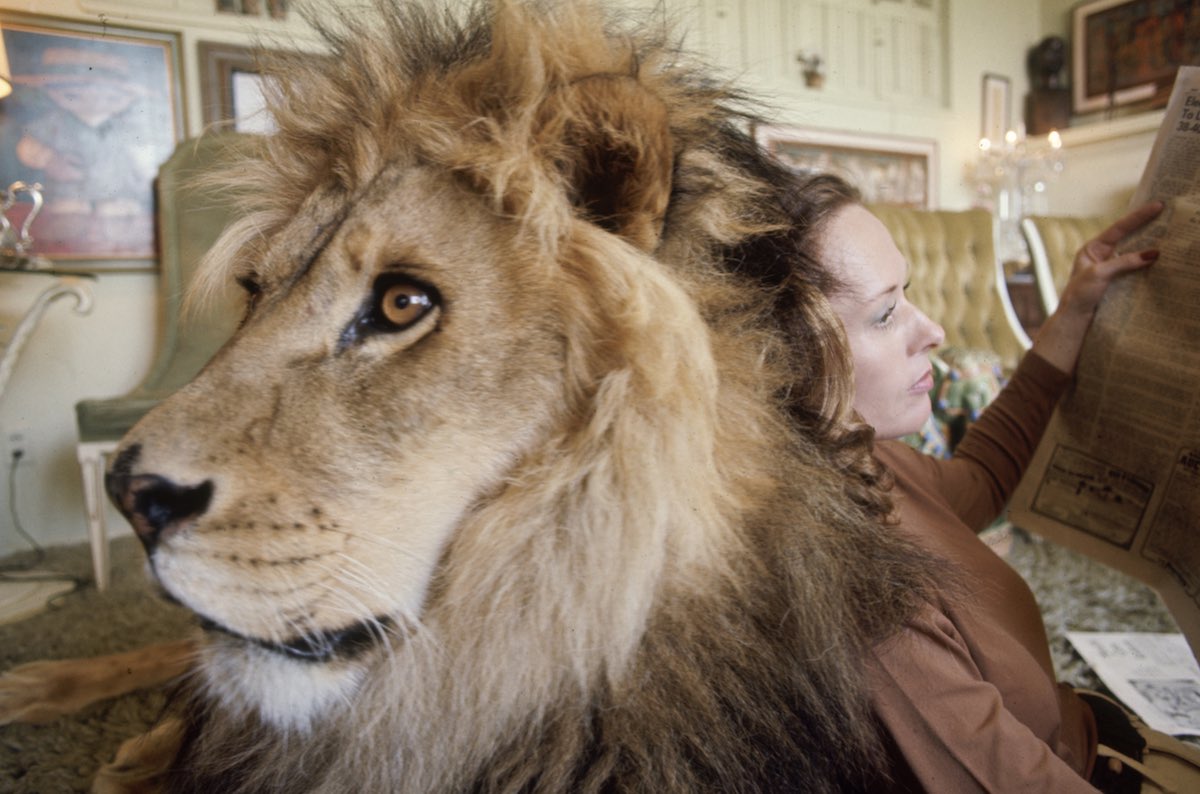
Earnest and Dumb is a Good Look
propellermag.com
Sifting through some old posts and came across this one from @Jake. I had about two ounces of Russels Reserve left in my decanter and added about four ounces from the last of a bottle of Whistle Pig Farmstock Rye. To make it a decent start I topped that all off with another five-ish ounces of Jefferson’s Reserve. Drinking it neat to see what I’ve got. It’s… a surprisingly nice sipping whiskey so far. We’ll see where my Infinity bottle goes from here.

“Infinity Bottles” Are the Whiskey-Nerd Hobby You Need in Your Life
It's like blending your own booze. And sometimes it even tastes good.
insidehook.com
The Northwest Collection. Propeller Books recently (Nov. 1) issued the first three books in their new imprint representing PNW’s regional literary history.

Northwest Collection — Propeller Books
Titles that represent the rich literary history of the Pacific Northwest, published in quality editions featuring introductions and insights from contemporary writers.
propellerbooks.com
I’ll kick off my seabirding with an old personal essay, so you can make a pretty quick determination if I’m a follow or not ;)

"The True Score": Personal History by Benjamin Craig
propellermag.com